Reviews
Best Outdoor TV Antenna for Local Channels (2026)
The best outdoor TV antenna for local channels gives you free ABC, CBS, NBC, Fox, and PBS in full HD — without a monthly fee. If you're more than 35 miles from broadcast towers, living in a hilly area, or setting up a ba
The best outdoor TV antenna for local channels gives you free ABC, CBS, NBC, Fox, and PBS in full HD — without a monthly fee. If you're more than 35 miles from broadcast towers, living in a hilly area, or setting up a backyard or patio TV, an outdoor antenna is the right tool for the job. Our team tested and researched the top outdoor antennas to find picks for every install type.
This guide covers the best outdoor antennas, how to mount them, how to run coax the right way, and real-world setup examples for backyard sports viewing.
Contains affiliate links — we may earn a commission at no extra cost to you. Affiliate disclosure
Quick Picks by Use Case
| Use Case | Best Pick | Range | Price |
|---|---|---|---|
| Patio or backyard TV | Pole-mount directional antenna | 60–80 mi | ~$45–$70 |
| Rooftop install, 50–80 miles | Amplified directional antenna | Up to 80 mi | ~$60–$90 |
| Rural home, 80+ miles | Long-range amplified multi-directional | Up to 150 mi (rated) | ~$80–$120 |
| Detached garage or shed | Compact outdoor antenna + distribution amp | 40–60 mi | ~$40–$65 |
| Multi-TV outdoor setup | Outdoor antenna + coax splitter/amp | Varies | ~$60–$100 |
Do You Need the Best Outdoor TV Antenna for Local Channels?
Indoor antennas (/reviews/best-indoor-tv-antennas) work perfectly for most suburban households within 35–50 miles of broadcast towers. But several situations call for an outdoor antenna instead.
Go outdoor if:
- You're more than 40–50 miles from the nearest broadcast towers
- You're in a hilly, forested, or heavily built-up area with obstructed line of sight
- Your indoor antenna gets choppy signal or missing channels despite good placement
- You're setting up a TV on a patio, backyard deck, or detached garage
- You want to run signal to multiple TVs across a larger home
Stick with indoor if:
- You're within 30–40 miles of towers in a flat, open suburban area
- You only need signal in one room of the main house
- You rent and can't mount hardware on the exterior
For a full comparison of your options — antennas, live TV apps, and streaming services — see our guide to watching local channels without cable (/guides/how-to-watch-local-channels-without-cable-2026).
Best Outdoor TV Antennas Reviewed
#1: Mid-Range Outdoor Directional Antenna — Best for Most Installs
Best Overall
Outdoor Directional TV Antenna (Mid-Range)
[VERIFY: current price ~$45–$70]
The standard outdoor antenna for most cord cutters. A directional yagi-style design that mounts on a pole or eave, targets the broadcast tower cluster, and handles 50–80 miles in clear-sky conditions.
Pros
- Strong directional gain — pulls in distant stations cleanly
- Weather-sealed for outdoor year-round use
- Works on a J-mount, eave bracket, or fence post
- Passive (no power) — nothing to fail outdoors
- Handles 50–80 miles in most terrain
- Low noise floor — no pixelation at rated range
Cons
- Must point at towers — one compass direction only
- Harder to install than a window sticker
- Doesn't help if towers are in multiple directions from your home
Best placement: Mount 10–20 feet off the ground on the side of your home facing broadcast towers. Point the antenna element toward the towers using a compass or a free signal-finder app. Higher equals better signal — a chimney or gable mount typically outperforms a fence post by 10+ dB.
#2: Amplified Long-Range Outdoor Antenna — Best for 60–120 Miles
Best for Distance
Amplified Long-Range Outdoor Antenna
[VERIFY: current price ~$65–$100]
A larger directional antenna with a built-in or inline amplifier for homes 60 to 120 miles from broadcast towers, or in hilly terrain where a passive antenna falls short.
Pros
- Amplifier boosts gain for marginal signals
- Handles 60–120 miles in good conditions
- Some models include built-in signal-strength indicator
- Good for rural installs far from major cities
- Works with distribution amplifiers for multi-TV setups
Cons
- Amplifier requires a power supply (usually a power inserter on the coax run)
- Can overdrive tuners if you're actually close to towers — check before buying
- Larger form factor requires solid mounting point
- More expensive than a passive antenna
Amplifier warning: If you're within 30 miles of towers and getting a strong signal, an amplifier can cause overload distortion. Use amplification only when passive signal is weak or choppy. More signal isn't always better — clean signal is.
#3: Compact Outdoor Antenna — Best for Patio, Backyard, and Shed Installs
Best for Outdoor TV
Compact Outdoor TV Antenna
[VERIFY: current price ~$35–$55]
A smaller, low-profile outdoor antenna for patio pole mounts, fence posts, or the side of a shed. Ideal for backyard TV setups where you need a clean install in a visible location.
Pros
- Low profile — doesn't look industrial on a patio
- Mounts on a standard 1" pole or fence post
- Weather-resistant housing rated for outdoor use
- Works for 40–60 mile range in most suburban areas
- Lightweight — no heavy bracket needed
Cons
- Lower gain than full-size outdoor antenna
- Not ideal beyond 60 miles without amplification
- Wind can shift direction if pole mount isn't secure
#4: Attic-Mounted Antenna — Best Without Exterior Drilling
Best for Renters / No-Drill
Attic/Indoor-Outdoor Antenna
[VERIFY: current price ~$40–$65]
An outdoor-grade antenna mounted inside the attic. You get significantly better range than a window antenna without drilling through exterior walls. Signal loss through attic sheathing and roof shingles is about 10–20%.
Pros
- No exterior mounting or drilling required
- Protected from weather and UV — longest lifespan
- Reaches 40–70 miles depending on attic construction
- Easier to aim: just point toward towers from inside
- Good for HOA-restricted homes
Cons
- Signal loss from shingles/sheathing — not ideal for marginal signals
- You need attic access
- Metal roof or radiant barrier significantly reduces signal
- Not an option for flat-roof or slab homes
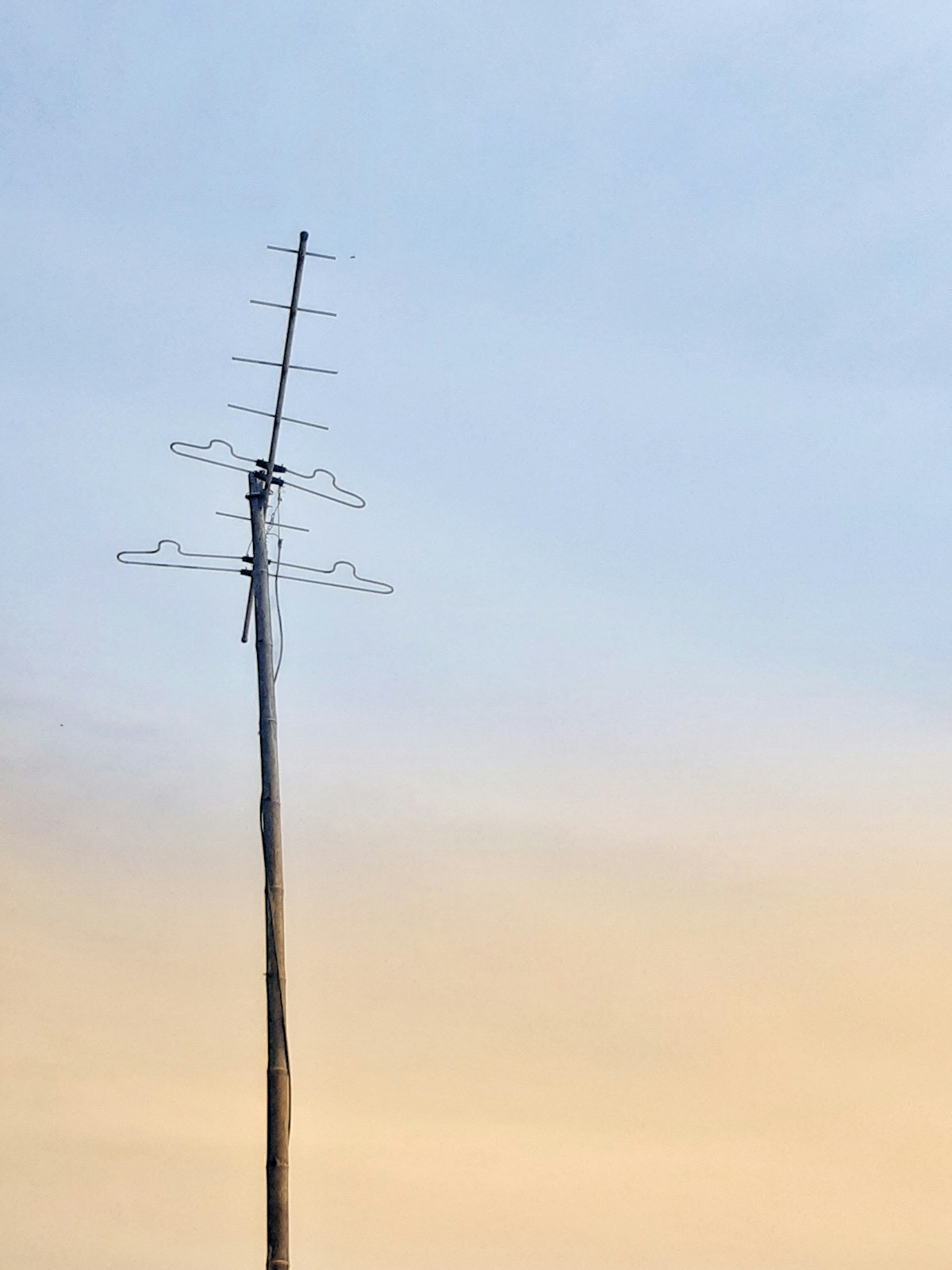
Outdoor antenna mounted on a J-mount bracket on the exterior wall of a house (/images/tv-antenna-hero.jpg "Outdoor antenna mounting on exterior wall")
Signal Range, Amplifiers, and What the Numbers Actually Mean
Antenna packaging loves to claim "150-mile range." Here's what those numbers actually mean in practice.
Rated range vs real-world range:
| Rated Range | Realistic Range (Suburban) | Realistic Range (Hills/Dense) |
|---|---|---|
| 35 mi | 20–30 mi | 15–20 mi |
| 60 mi | 40–55 mi | 30–40 mi |
| 80 mi | 55–70 mi | 40–55 mi |
| 150 mi | 70–100 mi | 50–70 mi |
The FCC's signal propagation model that governs OTA broadcasting tops out at around 60 miles in real-world conditions. Anything beyond that gets into marginal signal territory where atmospheric conditions, terrain, and tree cover have an outsized effect.
When to add an amplifier:
- You're more than 50 miles from towers and signal is choppy or stations are missing
- You're running more than 50 feet of coax (signal degrades ~3 dB per 50 feet for RG6 cable)
- You're splitting the signal to two or more TVs without a powered splitter
When NOT to add an amplifier:
- You're within 30 miles of towers — overload causes more problems than it fixes
- Your signal is already clean — amplification doesn't improve a good signal
Coax, Cable Runs, and Splitter Loss
The cable run from your outdoor antenna to your TV matters more than most people expect.
Cable type: Always use RG6 quad-shield coax for outdoor runs. RG59 (older, thinner) is fine indoors but degrades faster with weather exposure and has higher signal loss per foot.
Coax length and signal loss (RG6):
| Cable Length | Signal Loss |
|---|---|
| 25 feet | ~1 dB |
| 50 feet | ~2–3 dB |
| 100 feet | ~4–6 dB |
| 150 feet | ~7–9 dB |
Splitter loss: Every coax splitter reduces signal. A 2-way passive splitter loses ~3.5 dB. A 4-way passive splitter loses ~7 dB. If you're splitting to multiple TVs, use a distribution amplifier instead of stacking passive splitters.
For a detailed guide to splitting antenna signal across multiple TVs — including which splitter setups actually work — see our best HDMI splitter for streaming on multiple TVs (/reviews/best-hdmi-splitter-for-streaming-multiple-tvs) guide, which covers both HDMI and coax distribution setups.
Weatherproofing coax connections: Use self-amalgamating (silicone) tape on all outdoor F-connector joints. Moisture in the coax connector is the number one cause of signal degradation in outdoor antenna setups. Wrap each outdoor joint, then wrap again. It takes two minutes and prevents years of trouble.
Backyard and Patio Setup Examples
Setup 1: Patio TV for Summer Sports
Goal: Free local network games (NFL on Fox/CBS, college football, MLB on Fox/ABC) on a weatherproof TV on a covered patio.
- Antenna: Compact outdoor antenna on a 6-foot pole next to the patio, aimed at towers
- Coax run: 30 feet RG6 from antenna into the patio area, weatherproofed joints
- TV: Direct connection to coax port
- Streaming: Fire TV Stick 4K (https://cordcutterpro.com/reviews/fire-tv-cube-review) in the TV's HDMI port for streaming apps when live sports aren't on
- Total antenna cost: ~$50–$65 one-time
Setup 2: Detached Garage or Workshop
Goal: Get local channels in a detached garage 75 feet from the house.
- Antenna: Mid-range outdoor directional antenna mounted on the garage exterior
- Coax run: 80 feet RG6 — consider a small inline amp to compensate for cable loss
- Amplifier: Single-port inline amp at the antenna to offset coax run loss
- TV: Direct connection at the end of the run
- Note: Keep the amplifier close to the antenna, not close to the TV — amplifying a weak signal works, amplifying an already-noisy signal doesn't help
Setup 3: Multi-TV House + Backyard
Goal: One outdoor antenna feeding signal to three TVs — main living room, bedroom, and backyard patio.
- Antenna: Amplified outdoor antenna on the roofline, aimed at towers
- Coax: 50-foot run from antenna to a central distribution amplifier inside
- Distribution amp: 4-port distribution amplifier splits signal to three coax runs without loss
- TVs: Each TV connects to its own coax run from the distribution amp
- Total cost: ~$80–$120 antenna + distro amp
This is the cleanest whole-home setup for cord cutters who want free locals everywhere. For the full range of streaming device options to pair with each TV, see our best TV antennas for cord cutters guide (/reviews/best-cord-cutter-tv-antennas-2026).
Mounting Options
J-mount on exterior wall: The standard. A J-pipe bracket bolts to the fascia, siding, or chimney. Good for most directional antennas.
Tripod roof mount: For flat roofs or second-story installs where wall mounting isn't practical. Requires ballast or roofing screws.
Chimney mount: Excellent height without roof penetration. Straps wrap around the chimney — no drilling required.
Fence post or patio umbrella pole: For low-height backyard installs. Works well when towers are relatively close (under 40 miles) and the location is clear of obstructions.
Attic beam mount: No exterior exposure. Mount to a rafter or truss beam with a standard hose clamp. Signal loss from roof materials varies — 10–20% is typical for standard asphalt shingles, much more for metal roofing.
Frequently Asked Questions
Q: Do I need a permit to install an outdoor TV antenna?
In the US, the FCC's OTARD rule (https://www.fcc.gov/consumers/guides/otard-rule) (Over-the-Air Reception Devices) prohibits most homeowner associations and local governments from restricting outdoor antenna installation on property you own. HOAs can regulate placement to some extent (e.g., not on the front-facing roofline), but cannot prohibit antenna use outright. Renters have similar protections for antennas within their exclusive-use space (balconies, patios). Check your specific HOA rules, but most outdoor antenna installs are legally protected.
Q: How high does the antenna need to be?
Higher is almost always better. Every 10 feet of height increase meaningfully reduces terrain and vegetation obstruction. The practical minimum for most suburban installs is 10 feet. A roofline or chimney mount at 20–30 feet is ideal. In clear terrain you can get away with lower — in hilly or forested areas, maximize height.
Q: Can I use an outdoor antenna with a smart TV?
Yes. Any TV with a coax (RF) input has a built-in tuner. Connect the antenna coax to the TV's RF port, run a channel scan, and you'll see all available local channels. No external tuner box needed.
Q: What's the best free tool to check signal before buying?
The FCC's DTV Reception Maps tool (https://www.fcc.gov/media/engineering/dtvmaps) and AntennaWeb.org (https://www.antennaweb.org) both show tower locations and signal predictions for your address. Enter your zip code, get a signal report, and use the predicted signal strength to choose passive vs amplified and to find which direction to aim.
Q: How do I find the direction to aim my outdoor antenna?
Use the FCC DTV tool or TVFool to identify which bearing (compass direction) your towers are on. Most US metros have a broadcast tower cluster within a 30-degree arc — easy to aim at. Some rural areas have towers in opposite directions, which requires a multi-directional antenna or a remote-controlled antenna rotator.
Q: Can one outdoor antenna serve my whole house?
Yes, with a distribution amplifier. Mount one outdoor antenna, run coax to a distribution amplifier (typically 4-port), and branch out to each TV. This is better than daisy-chaining passive splitters. Keep passive splits to a minimum.
Q: My outdoor antenna still can't pick up a specific channel. Why?
A few common causes: (1) the channel's broadcast tower is in a different direction from your antenna aim, (2) the channel transmits at lower power than the major networks, (3) there's a terrain obstruction specifically blocking that tower. Try scanning at different antenna heights and orientations. Some channels use low-VHF frequencies (2–6) that require a larger antenna element than typical UHF antennas.
The Bottom Line
An outdoor antenna is the right move when an indoor antenna can't deliver clean signal — whether because of distance, terrain, or a backyard TV setup. For most suburban cord cutters who are 40–80 miles from towers, a mid-range directional outdoor antenna mounted at roofline height will pull in every major local channel.
Mount it high, aim it at your towers, use RG6 coax, weatherproof every joint, and you'll have free local channels for the life of your home.
See also: Best TV Antennas for Cord Cutters (/reviews/best-cord-cutter-tv-antennas-2026) | Best Indoor TV Antennas (/reviews/best-indoor-tv-antennas) | How to Watch Local Channels Without Cable (/guides/how-to-watch-local-channels-without-cable-2026)